

In our first post in this series we saw the overarching reason for which Christ came. We see this in His first miracle – changing water into wine. Jesus came to sanctify ... transform ... the ordinary. Water to wine, sinners to saints, common every-day life to extraordinary.
Today we look at the first of four aspects involved in this transformation Jesus wants to accomplish in us and for us.
This Miracle Reveals Our Great Need
And when they ran out of wine, the mother of Jesus said to Him, “They have no wine.” (v 3)
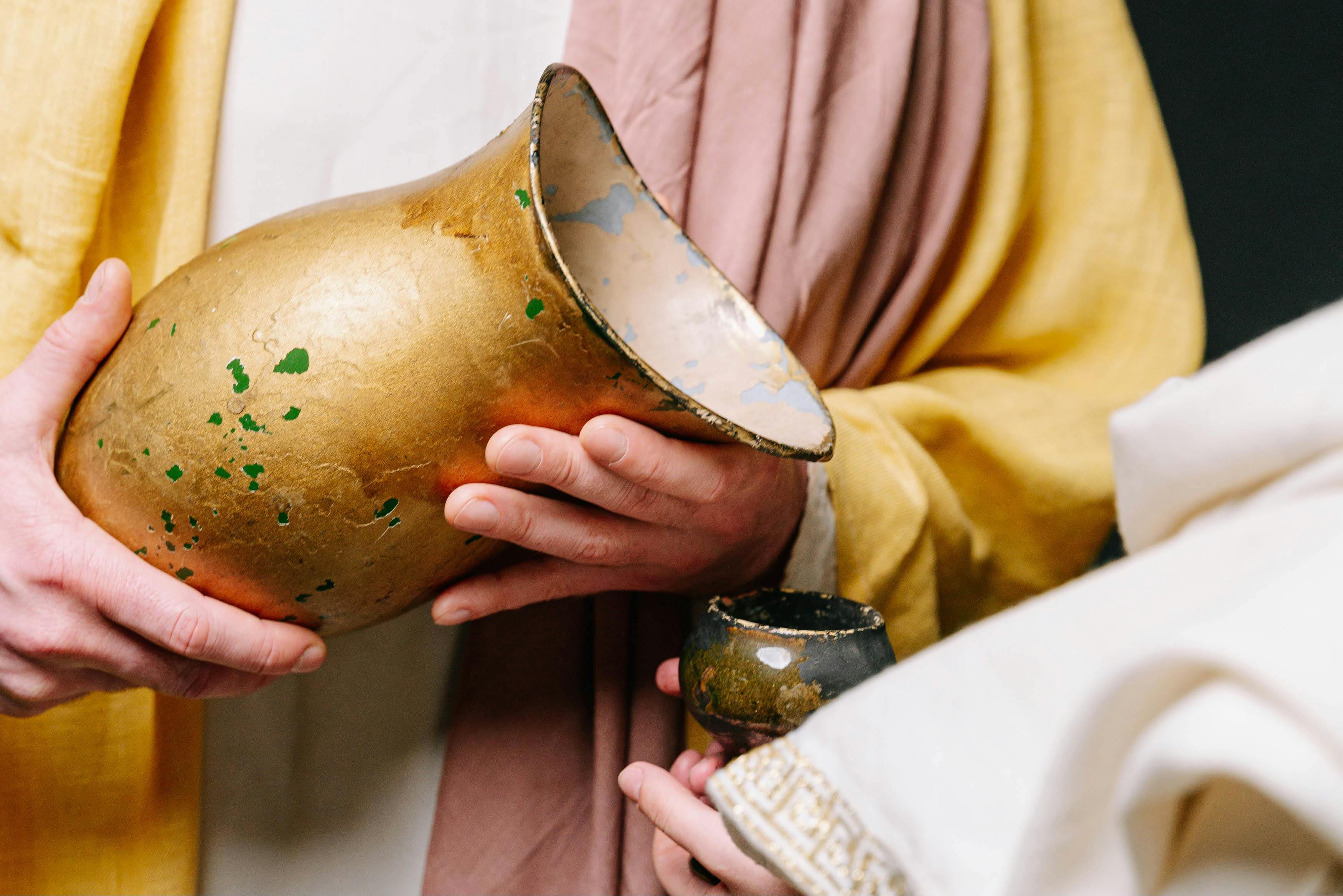
In the ancient world, the wedding feast was a big deal. It marked the end of the couple’s betrothal period and typically lasted as long as seven or eight days. It ended with the wedding ceremony.
The chief humiliation for the groom’s parents (unlike today’s custom, the groom’s family paid for the wedding feast) was to run short of food or wine. Such a faux pas constituted a social stigma ... and one the parents and the young couple would never live down.
So when Jesus’ mother said to him, “they have no wine,” she was doing much more than passing on information. She was telling him that a catastrophe was at hand.
Their supply was insufficient.
Wise is the Christian who realizes that, like Israel in the wilderness, we are dependent on our Lord for sustenance. This is precisely why He taught us to pray “give us this day our daily bread.”
It is a prayer for daily provisions.
Most of us, thank God, do not know what it is to have to pray for food. But we do know what it means to be in need of more strength, more peace, more kindness, more goodness, more calm, more joy, more faith, more courage, more hope....
The cause of life’s weariness isn’t so much about what is happening but whether or not we have what is needed to face what is happening.
Again, wise people know this. Sadly, others will have to wait on a personal crisis to prove it to them. They will have to learn that in and of themselves, they are not sufficient. They are out of wine.
The prophet Isaiah tells us, “Even the youths shall faint and be weary, And the young men shall utterly fall,” (40:30).
The point? Vitality and physical strength are not enough. In the routine of life, our problem – our need – is the same as that wedding party in John 2. We run out. We come up short. We need more.
We exhaust our sufficiency.
Contrast this with what the Bible tells us we can expect if we admit our dependency on God and look to Him for our daily bread.
There are many passages on this. Let me give you three:
1. Is anything too hard for the LORD? – Genesis 18:14. The question is a rhetorical one. (By the way, it was said to a 100 year old man with a 90 year old wife whom God had promised a child.)
2. And he said to me, “My grace is sufficient for you, for My strength is made perfect in [your] weakness.” – 2 Corinthians 12:9
3. ...strengthened with all might, according to His glorious power - Colossians 1:11
I am reminded of that great old hymn that says, “Day by day, and with each passing moment; strength I find, to meet my trials here.”
It might interest you to know that the hymn Day by Day was written by a 26-year-old Swedish woman (Lina Sandall Berg). The occasion? She and her beloved father were crossing a lake one day when the boat caught a wave, tossing her father overboard. He drowned before her eyes. Ms. Berg wrote this song as a testament to God’s faithfulness in sustaining her in a grief so terrible that human strength alone could offer no succor.
I want to close by citing John 10:10:
I have come that they may have life,
and that they may have it more abundantly.
This verse tells us two things. There is something about what Jesus is offering us that affects both the quality and quantity of our life.
As to quality – the people He spoke this to already had life. So He must be speaking to something better, something richer when He says, “I have come that they may have life.”
As to quantity – He adds, “and have it more abundantly.” Jesus is offering us more.
He offers us a life that is superior in quality and opulent in quantity.
He wants to sanctify our ordinary.
Til next time,
