

Even before it was finished, the workers on the Tacoma Narrows Bridge gave the massive structure – the world’s third-largest suspension bridge at the time – the nickname of Galloping Gertie. Not a good sign as bridges aren’t intended to “gallop.”
The bridge opened to much fanfare on July 1, 1940. Just four months later as rivets popped and steel twisted, Galloping Gertie collapsed dramatically and plunged into the cold waters of Puget Sound.
Turns out the bridge had a major structural flaw in its design that disallowed it from accommodating winds as low as 40 mph.
Contrast this with the amazing palm tree.
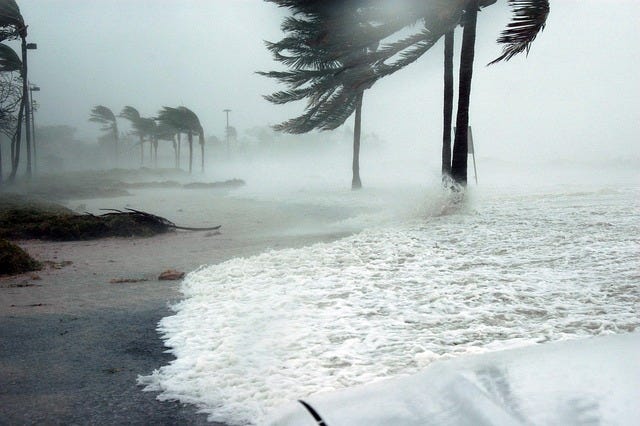
While regal oaks, mighty maples, towering pines, and noble sycamores are splintered, split, and uprooted... the incredible palm tree rides out the mightiest of hurricanes.
Forty miles an hour? Fuggedaboutit. Try 150!
Want to handle the pressures of life like a palm tree?
Here’s what you’ll need:
1. The Right Structure
Unlike the other trees mentioned above, palm trees have an aerodynamic canopy and long, accommodating fronds that can ride the heaviest of winds.
Further, palms have no heavy branches; they grow large leaves (fronds) directly from the top in a relatively open arrangement. In strong winds, the fronds fold up like a fan or bend backward, reducing surface area and wind resistance. This prevents them from acting like sails that catch and amplify force.
What about you? Do you try to take on the heavy winds of life, refusing to accommodate what you cannot control? Do you become a sail for the pressures of life?
Or do you, like the palm, yield to its power?
A wise man once prayed, “God, grant me the serenity to accept the things I cannot change.”
2. The Right Substance
Palm trees have a flexible, non-woody trunk... that’s right, non-woody... that is more than a little remarkable.
Unlike typical trees with rigid wood (organized in rings, which adds strength but limits the ability to bend), palm trunks consist of a bundle of tough, fibrous strands scattered throughout a spongy, flexible tissue.
This structure lets the trunk bend dramatically—often 40–50 degrees or more—without snapping! Once the storm has passed, the palm then springs back to its previous state.
When the storms come, is it your tendency to flex, to flow, to bounce back? Or are you more like the oak, maple, pine, and sycamore? Do you try to match external forces with rigidity?
That’s an easy way to end up in the mulch yard of a garden center.
Remember, flexibility is the key.
3. The Right Security
The sneaky-strong palm tree has an extensive, fibrous root system. In fact, many palms develop a wide network of short, shallow roots that spread out and anchor a large mass of soil around the base. This creates a heavy, stable platform.
The advantage of this? It helps resist uprooting.
Isn’t it something that we use the same language for hard times? “It really uprooted my life.”
And this is precisely where our faith comes in. Life is hard. The winds can blow furiously.
But we have Christ’s promise that though shaken, though temporarily bent out of position, we need not be uprooted.
As we sink our roots in His Word, His Promises, His fellowship and communion... we are developing our root system.
This is our strength. This is our security.
Til next time,

Love this analogy. So good and thank you for sharing. I learned something today. ❤️