

The heart of grief and grieving can be simply stated: It’s about honoring the loss. And we honor it by allowing the grief it produces to be realized. By giving it space to live.
In that honoring we can find the beginning of our healing.[i]
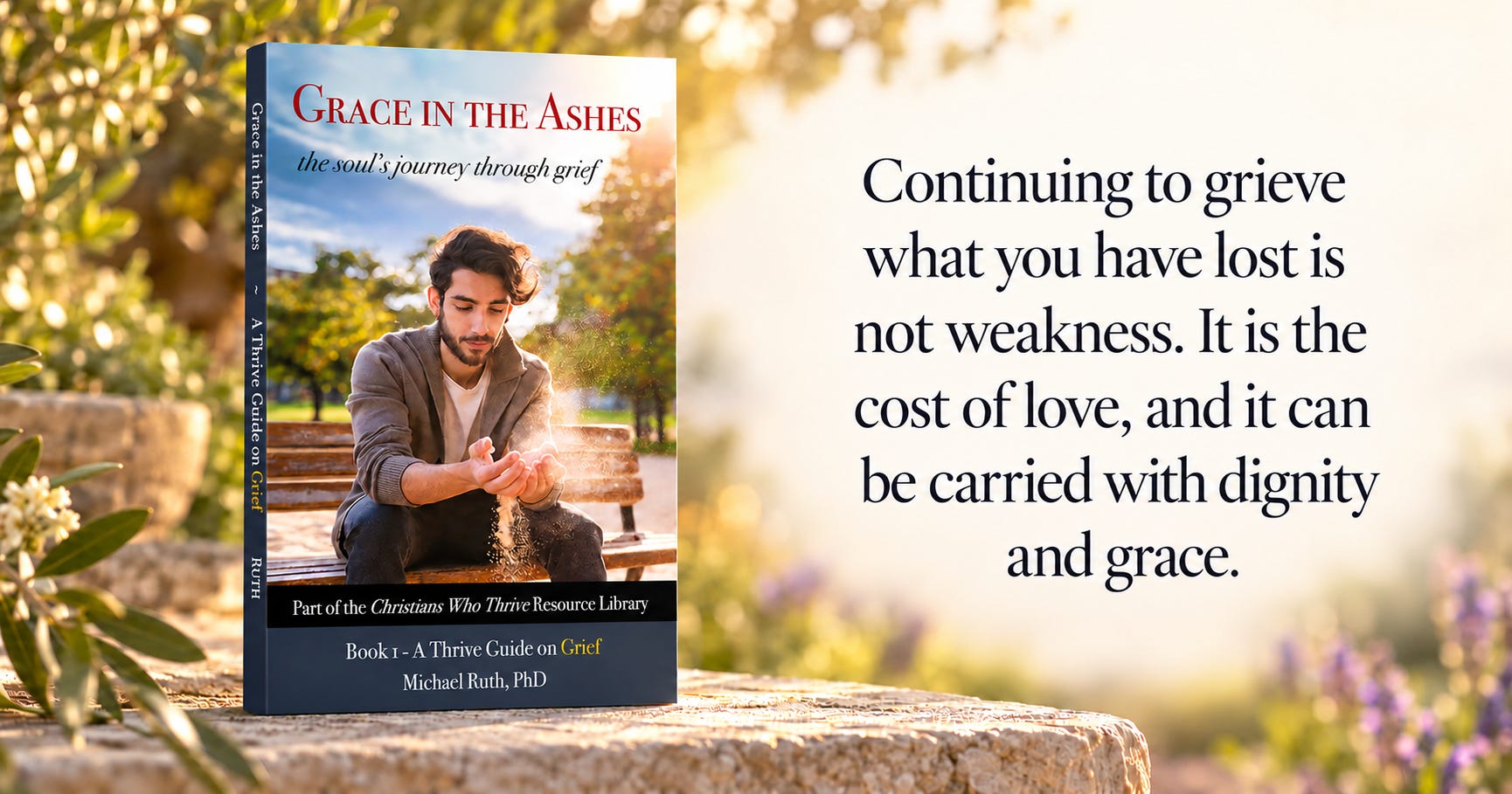
(An excerpt from Grace in the Ashes: The Soul’s Journey Through Grief.)
The Old Testament book of Ruth provides us with a beautiful example of someone who found healing by honoring the loss she suffered.
Let’s set the context (Ruth 1:1-5, NLT)…
In the days when the judges ruled in Israel, a severe famine came upon the land. So a man from Bethlehem in Judah left his home and went to live in the country of Moab, taking his wife and two sons with him.
The man’s name was Elimelech, and his wife was Naomi. Their two sons were Mahlon and Kilion. They were Ephrathites from Bethlehem in the land of Judah. And when they reached Moab, they settled there.
Then Elimelech died, and Naomi was left with her two sons.
The two sons married Moabite women. One married a woman named Orpah, and the other a woman named Ruth. But about ten years later, both Mahlon and Kilion died. This left Naomi alone, without her two sons or her husband.
In Old Testament culture, when a married woman’s husband died she lost more than just her spouse. She also very often lost her means of survival and access to the land she lived on, as well as social and legal protection. This made widows especially vulnerable, which is why Scripture repeatedly urges special care for widows and orphans.
For these reasons, after burying her husband and both her sons in Moab, Naomi makes the decision to return to Bethlehem where she is from, where she is known, and where there might possibly be some remaining, willing kin to help protect and care for her.
But she urges each of her two daughters-in-law to return to their own families where, hopefully, they can later remarry, have children of their own, and prosper.
Orpah eventually did so. But Ruth insisted on staying with Naomi. “Wherever you go, I will go … Your people will be my people, and your God, my God.”[ii]
Consider how much easier it would have been for Ruth to return to her own mother’s home and put her life with Naomi and the losses she suffered there behind her.
But she insisted, instead, that she go to Bethlehem with Naomi.
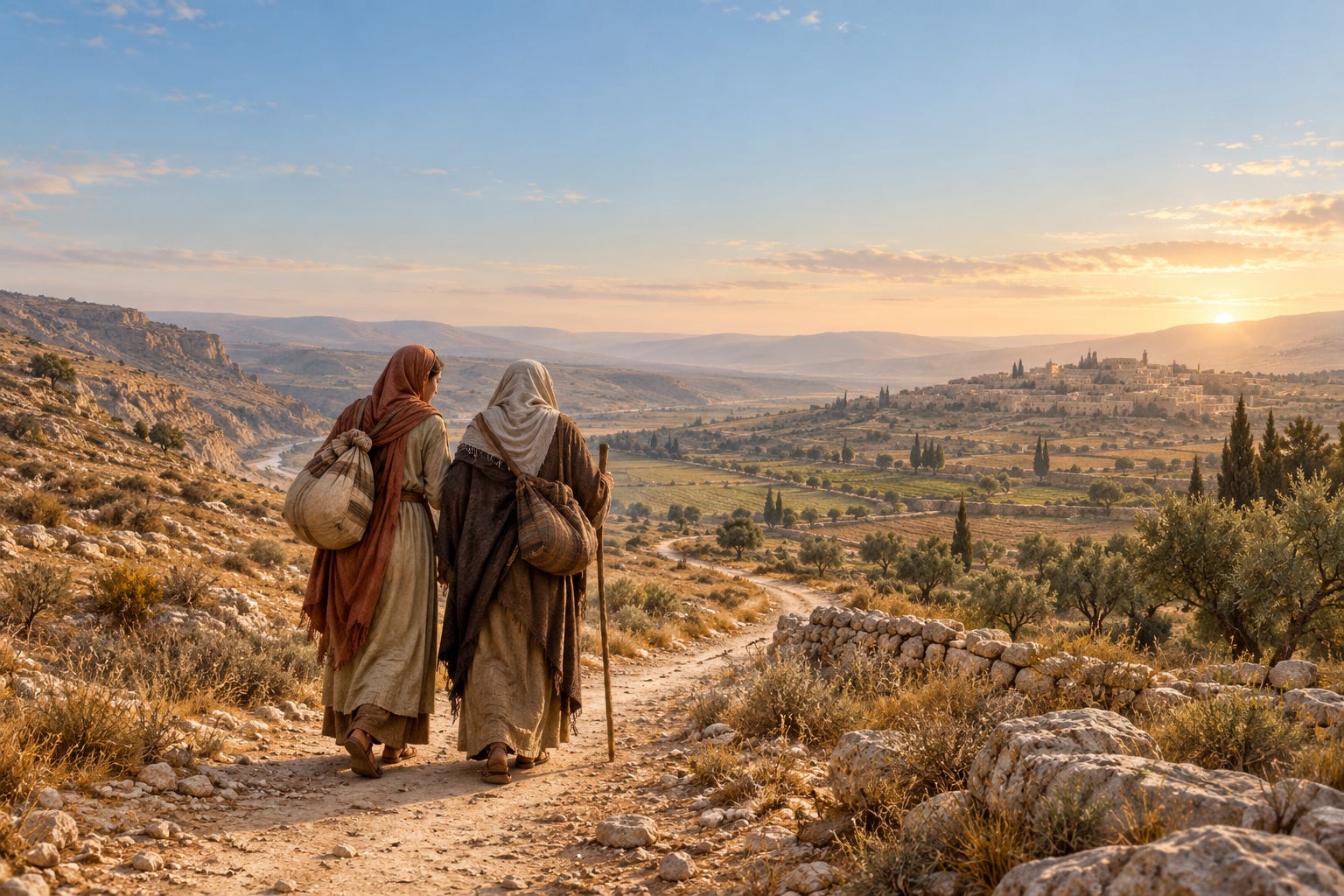
So evident in her choice was the strength of her love for Naomi as well as the courage she demonstrated in leaving her own homeland to settle in a foreign country. The trip on foot from Moab to Bethlehem would have been challenge enough. But she also places her future wellbeing in the hands of Naomi’s God instead of trusting that she could be better cared for, better protected by staying and marrying another of her own race.
What this means is that after suffering the loss of her husband as well as her sister-in-law and brother-in-law, Ruth chooses to also leave behind her own family, her friends, her home—all very significant losses and all within a short time frame.
But by placing her own faith in the one true God (v. the Moabite gods) and showing compassion to Naomi whom she obviously deeply loved and respected, Ruth honored the path of providence God designed for her.
Knowing the rest of Ruth’s story—including the fact that she became the great- grandmother of King David and is therefore in the lineage of Christ—I believe we can agree that she learned how to carry her grief with dignity and grace.
And when I think of a current-day example of these truths, Joni Eareckson Tada comes immediately to mind.
I’m sure you know her story, but just to recap…
Joni was an athletic, full-of-life 17 year old with dreams and plans for her future. Then one day when she and her sister were swimming in the Chesapeake Bay, she dove off a wooden raft anchored nearby into water that was not nearly as deep as she thought. As a result, a fracture between the fourth and fifth cervical vertebrae left her paralyzed from the shoulders down.
It would be hard to quantify all that Joni lost that day. Naturally, the repercussions of her accident included a lot of anger, depression, thoughts of suicide, and a significant blow to her faith.
This would be a tragic, tragic story if it ended here.
But somewhere inside the two years of intense rehab that followed her accident, Joni shares that she remembered 1 Thessalonians 5:18, “in everything give thanks.” So she began to think about what she could be thankful for in the midst of her pain.
According to her story, she could only think of little things at first. Then as her perspective widened, bigger blessings came to mind. And in time, God gave her the grace to embrace her loss as a gateway to a life she had never, ever dreamed of.
As a result, she has authored over 50 books. She has recorded several musical albums. And she even starred in an autobiographical movie of her life. But I would suggest that among her greatest accomplishments are the countless individuals whose lives she has impacted for both now and eternity.
And yet she still lives in constant pain. She struggles to even breathe as a result of her disability. She also beat cancer (twice) with the help of surgery, chemotherapy, and radiation.
But her spirit is indomitable. Her faith remains steadfast. And the harvest for what she continues to plant in life will continue long after the Lord takes her home.
Joni is a shining example of carrying loss with dignity and grace.
The secret to modeling these two examples lies in this excerpt from Grace in the Ashes:
Healing is not erasure. It is integration.
You do not stop grieving. You learn to carry the grief differently.[iii]
We cannot avoid loss.
But with God’s help, a gentle and compassionate guide, and the love and support of at least one close and trusted friend, we also can… in time… learn to bear the losses we suffer with dignity, grace, and a love that lights the way for others.

[i] Grace in the Ashes, p 4.
[ii] Ruth 1:16
[iii] Grace in the Ashes, p 78.
Christians Who Thrive brings together timeless biblical truths with psychological wisdom that equip you to replace the pain and frustration you now carry with personal, spiritual, and relational experiences you long for. ©2026 Growth Resources LLC | Christians Who Thrive. All Rights Reserved.